SAMPLE:
668 TURKISH BELGIAN ADOLESCENTS
DATA:
METHOD:
SOCIAL NETWORK ANALYSIS
ROLE:
LEAD RESEARCHER
Belonging Across Cultures
context.
Schools are becoming increasingly diverse, bringing students from different cultural backgrounds into shared classrooms. At the same time, friendships often remain culturally patterned, exposing students to different emotional norms. Understanding how these social networks relate to alignment with both heritage and majority emotional norms offers insight into how belonging develops across cultural contexts.
approach.
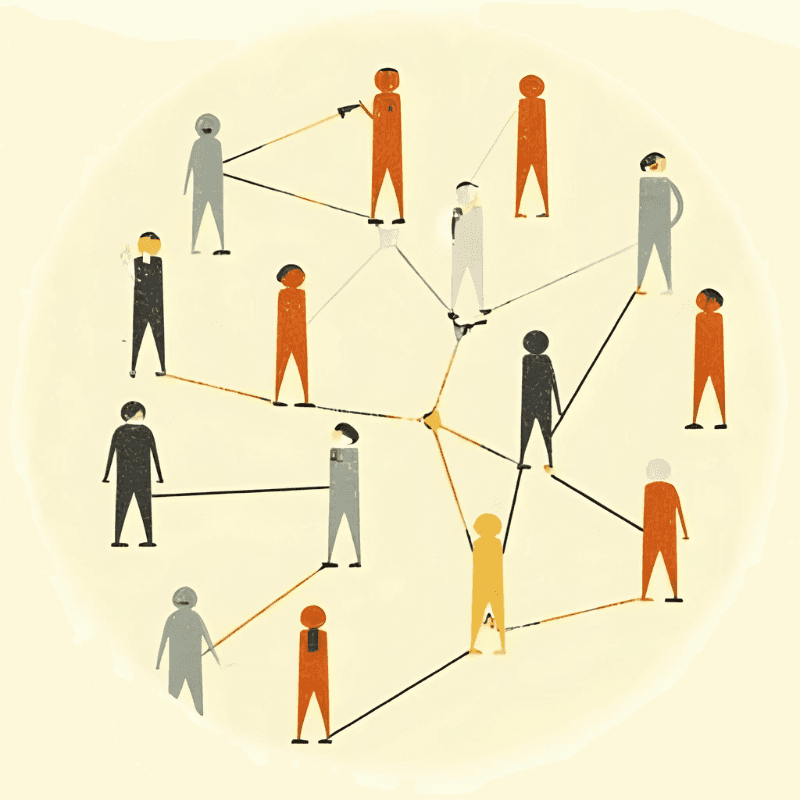
Students nominated their closest classmates ("Who are your best friends in class?"). This allowed me to construct each student's social network — both composition (majority vs. minority friends) and density (whether friends were also connected to each other). Students also completed the Emotional Patterns Questionnaire, rating emotions they experienced in specific situations.
I computed emotional fit scores that captured how closely each student's emotional patterns matched typical Belgian-majority vs. Turkish-minority norms. Using mixed-effects regression, I tested whether network composition and structure predicted emotional fit, accounting for the nested nature of students within classrooms.
findings.
Students with more majority-culture friends showed higher emotional fit with majority norms.
This adaptation did not reduce emotional fit with their own heritage culture.
Friendship networks revealed subtle social dynamics that shape emotional alignment across groups.
impact.
Belonging is shaped by social access, not just individual attitudes. In organizations, informal networks influence who feels psychologically safe, emotionally aligned, and seen as part of the team. These results highlight the importance of designing inclusion strategies that reshape social pathways rather than relying solely on messaging or training.
quote.
Having majority friends does not entail the loss of minority cultural experiences.
Cultural Diversity & Ethnic Minority Psychology, 31(3), 501–508